- Tip 1: Measure Everything Carefully
- Tip 2: Build a Solid Frame
- Tip 3: Decide On Cabinet Doors, Drawers or Open Shelves
- Tip 4: Make Cardboard Templates for Irregular Shapes
- Tip 5: A Fold-Out Table Needs 2 Brackets
- Tip 6: Learn From Professionals
- Tip 7: Use Leftovers If You’re On A Budget
- Tip 8: Plan Out How To Secure Everything
Hello dear reader, the kitchen is probably the second most important thing in your camper van, after the bed. That’s why I want to share some tips with you that might inspire you for your own mini van to camper conversion.
Tip 1: Measure Everything Carefully
It doesn’t matter whether you planned everything in advance or whether you plan along the way, because you should always measure again before building the next part of your van. If you end up with less (or more) space than planned, you should alter your plans accordingly or in the worst case, redo the previous step in your conversion progress.
Tip 2: Build a Solid Frame
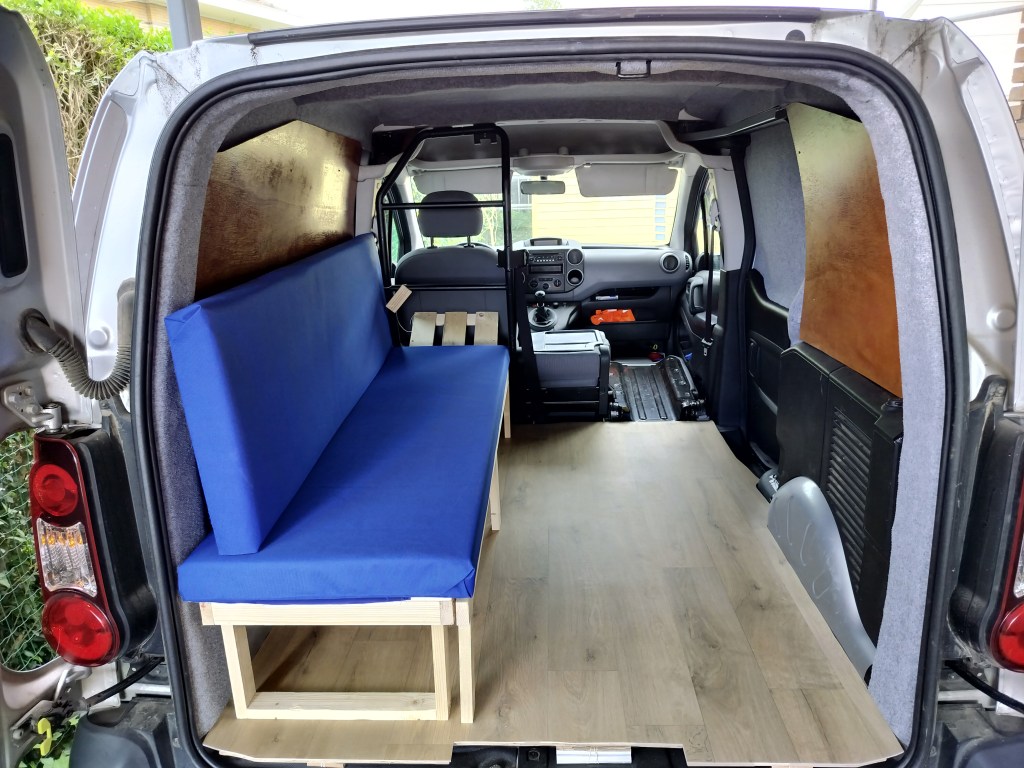
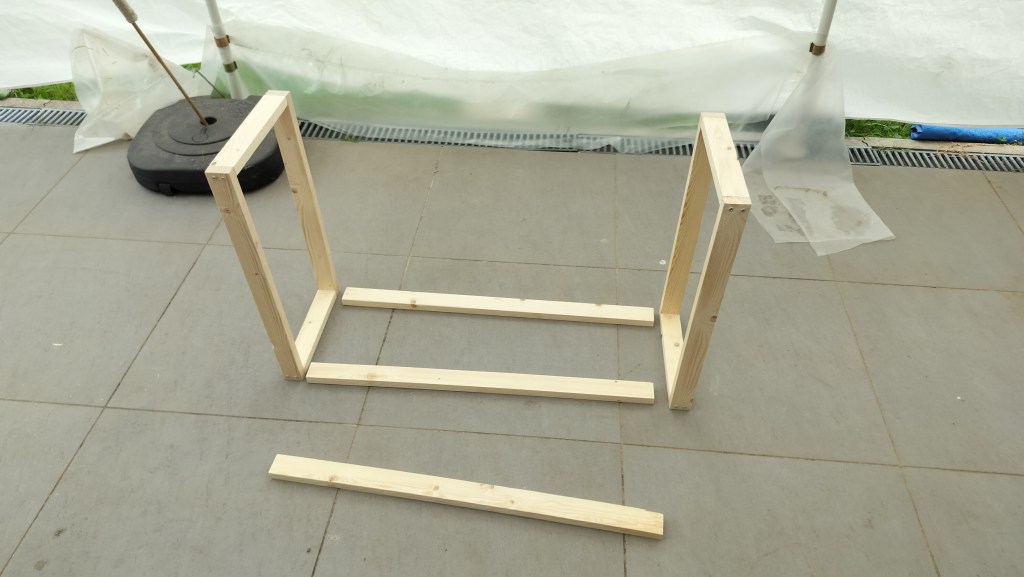
Your kitchen should be as strong as possible while also being lightweight. I was happy with the frame I built earlier for my sofa-bed, that’s why I used the same principles for my kitchen’s structure.
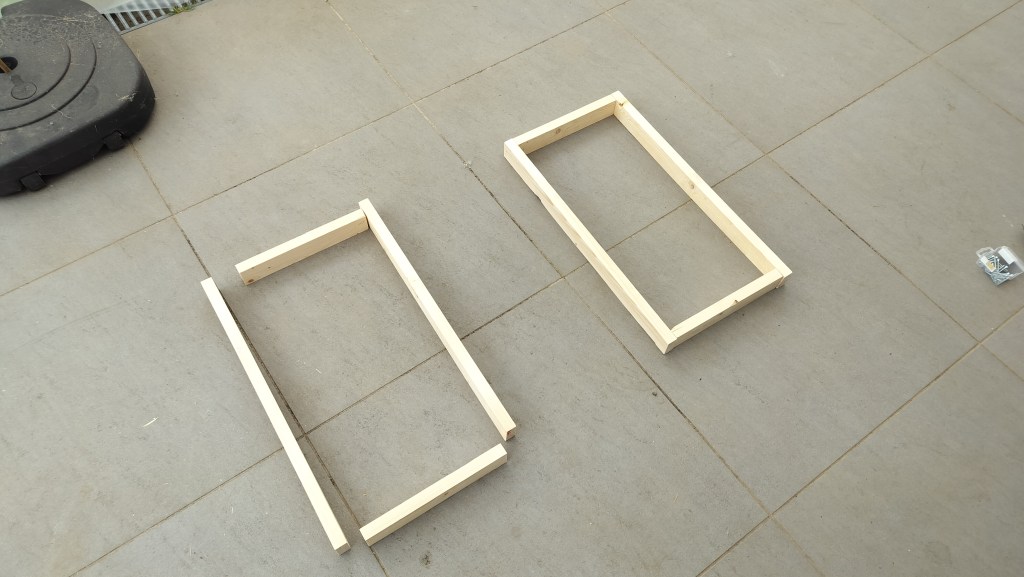
Depending on the thickness of your wooden slats, you should use a suitable size of screws. For longer and thicker screws, you might want to pre-drill small holes for the screws. Otherwise, your wood might start to split.
Tip 3: Decide On Cabinet Doors, Drawers or Open Shelves
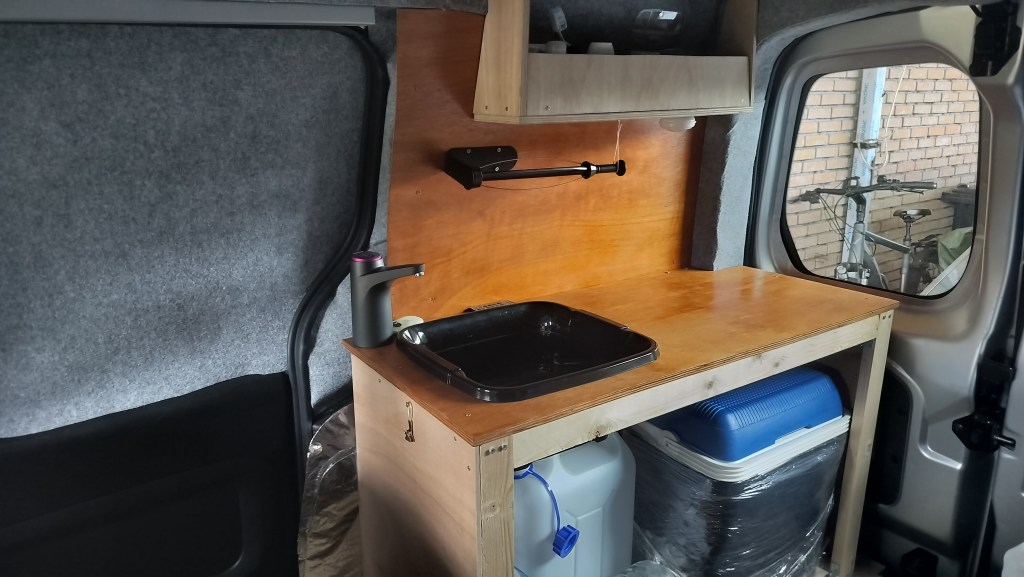
Based on your budget, your time available and your skill level, you must decide on the type of kitchen cabinet that suits you best. Originally, I wanted a simple slide door, but even that is above my skill level. So I settled on leaving the front of my kitchen open, whilst covering the sides with a sheet thick enough to attach a fold-out table.
Tip 4: Make Cardboard Templates for Irregular Shapes
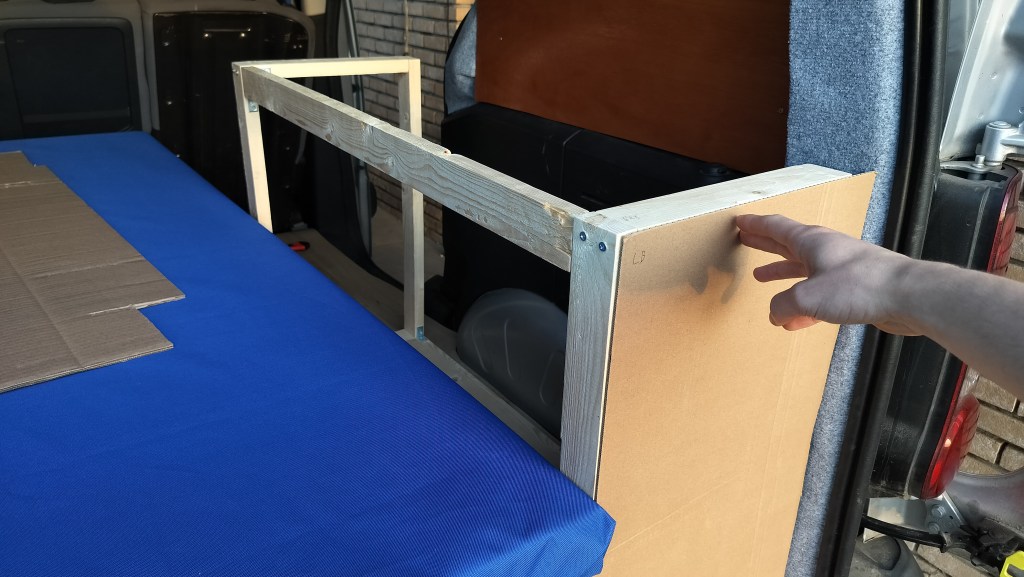
This is a trick that I’ve used regularly throughout the conversion progress. When your walls and ceiling don’t consist of straight lines, cardboard templates might be the best way to overcome this. I start by cutting out the general shape but a little bit bigger. Then I try to fit this template into the place I need it to be, after which I cut off the excess cardboard until it fits perfectly. Then I can draw the outline of this template on a piece of wood.

Tip 5: A Fold-Out Table Needs 2 Brackets
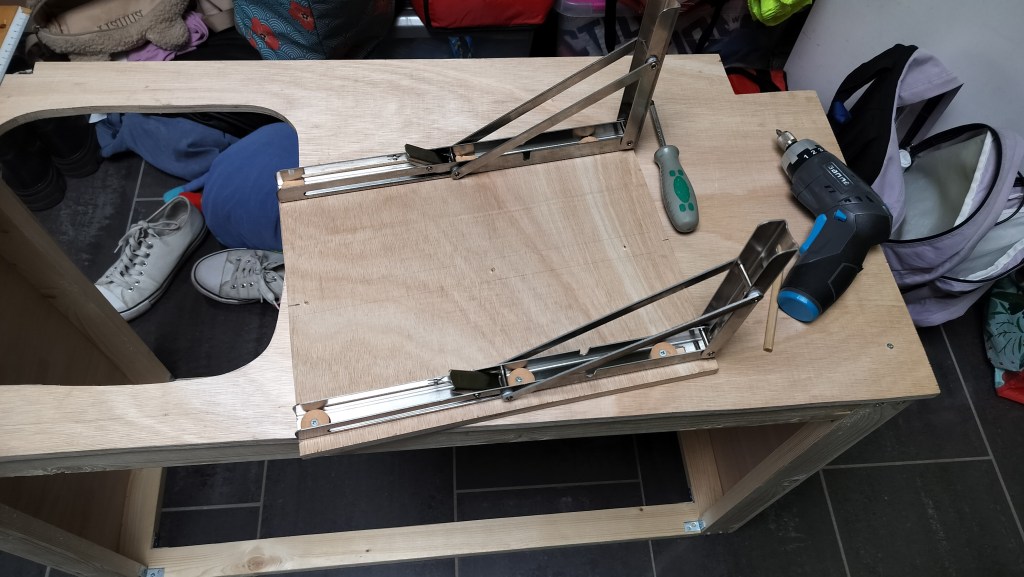
I bought a set of two folding brackets to make a fold-out table, but I wanted to test whether one bracket would be enough to make a stable one. If it worked, I would be able to make two tables with the set I got. But as you could have imagined, this failed completely. One folding bracket is NOT ENOUGH if you want a stable surface.
Tip 6: Learn From Professionals
Even though I don’t have a woodworking background, building my sofa-bed and kitchen felt very natural to me. I didn’t need any help or inspiration from others. But other things are out of my field of expertise, things like staining wood. When I made my walls, I just read the instructions on the packaging and improvised from there. This was a mistake. The layer was too thick and I didn’t even know I had to sand it.

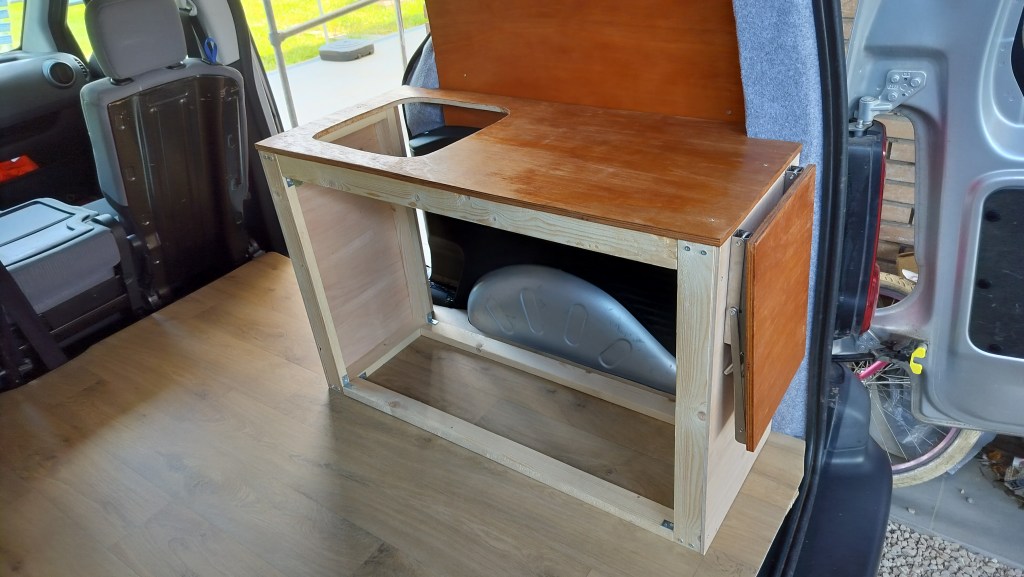
Luckily, it was just my walls. When I needed to stain my countertop, I decided to watch some professionals on YouTube. This finally gave me the knowledge needed to get the job done correctly. And whilst my counter isn’t perfect, it is very good compared to my previous attempt at staining.
Tip 7: Use Leftovers If You’re On A Budget
Sometimes I thought that I would have to buy new materials to finish a stage of the conversion. But when my kitchen cabinet was finished, I had just enough material to make a small shelf/cupboard. It doesn’t look fancy at all, but it serves its function and it didn’t cost me additional money.

Tip 8: Plan Out How To Secure Everything
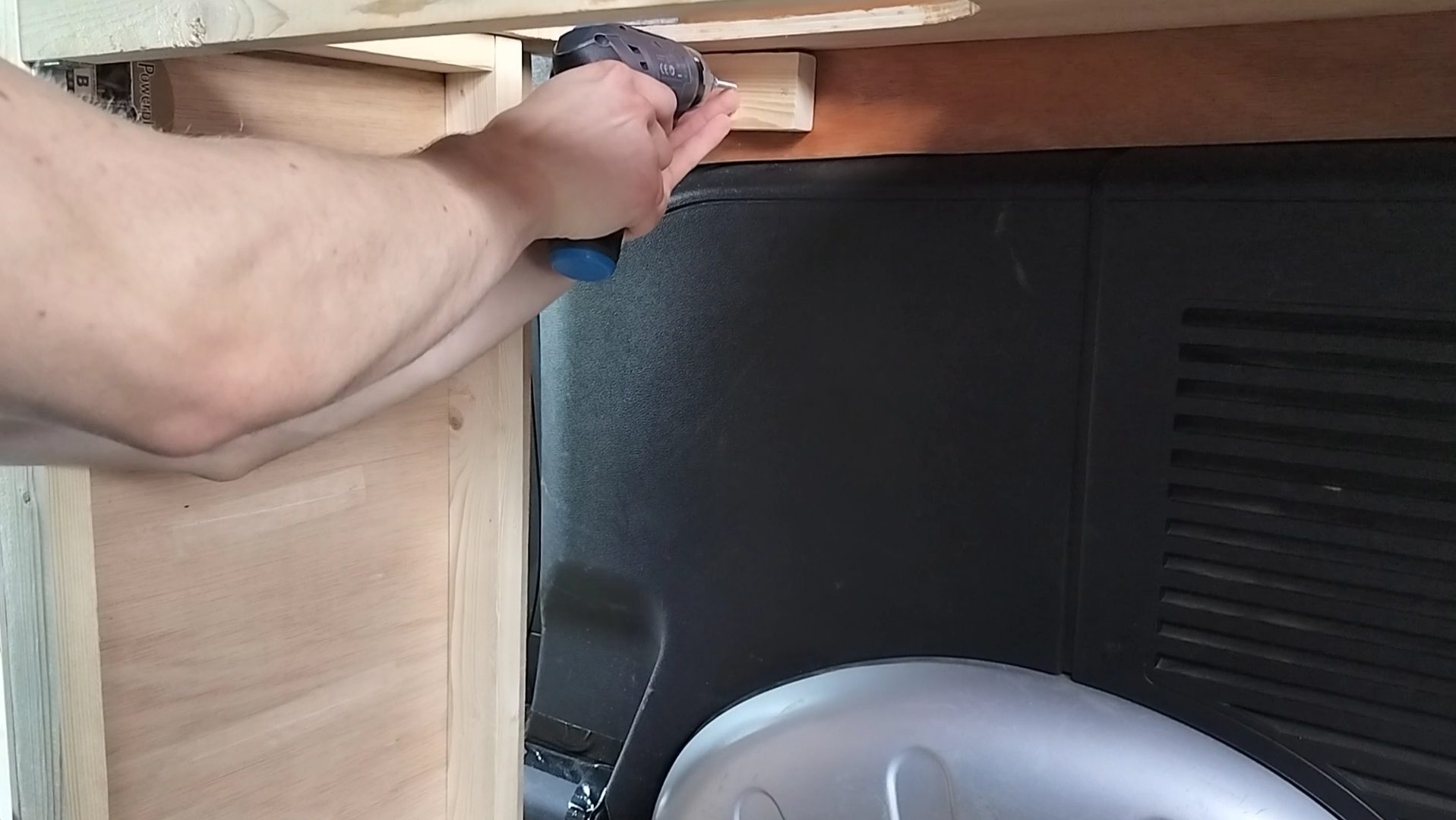
This is something you should think about before putting anything in your van. When your van is empty, you can see more easily where you can attach things to. Maybe there are things you can use as an anchor or something you can drill into. Keep those things in mind as you plan and build your van. You don’t want things moving around while you’re driving.
I hope these tips help you make your own campervan kitchen. Keep in mind that your van conversion is unique and you should base it around your own needs. This might be a challenge in the beginning, but anything is possible if you’re willing to learn.
 Freedom Travel Guy
Leave a comment